Saturday, March 12, 2011

Florence and the Chicago Machine

Political corruption and Chicago have been synonymous since the middle of the 19th century with the manipulation of elections and organized crime payoffs to the police. Recent federal investigations into the Richard M. Daley administration have proven that this corruption stands strong today. These investigations led to indictments, trials and convictions caused by the skimming of city contracts, using political work as a basis for awarding jobs and promotions in city departments, and manipulating real estate markets. As Mayor, Richard M. Daley has stepped into his father’s shoes and has established himself as one of the most powerful and influential big-city mayors.

Richard J. Daley was notorious for being the boss of Chicago when he was mayor from 1955-1976. He was responsible for massive downtown development in an attempt to maintain Chicago’s power on a national economic position. In his first year in office he built the Prudential Building, which provided residents with jobs and the city with tourists. This appealed to investors and developers. This would mark the beginning of the revitalization of the city since the Great Depression. Daley faced the challenge of suburbanization and what was called “white flight” as mentioned in the Jane Jacobs reading. Chicago was viewed as a city surrounded by affliction. The dismantling of this blight would call for the mass razing of neighborhoods, land clearance, and displacement of people and marked the beginning of class, racial, and political upheaval.

Up until the University of Illinois, a four-year college didn’t exist in Chicago or in Cook County. Daley chose the University of Illinois location. He stood against residential opposition who felt that they were promised more housing. Much like Jane Jacobs' fight against Robert Moses in her attempt to save Washington Square Park, resident Florence Scala led most of the protesting but to no avail. She did, however, persuade university trustees to preserve the Jane Addams Hull House. 


Florence Scala speaking in the garden of the Jane Addams Hull House Settlement, 1963.


Clearing of the University of Illinois site, 1963.

This decision was monumentally historic as the affects of it were still being felt in the late 1990’s and today. When the university was built, a retail market thrived on adjacent Maxwell Street. This market was the largest open-air market, known as the Ellis Island of the Midwest and the birthplace of Chicago Blues. University officials decided against keeping local businesses and slowly began expanding south, buying land in the Maxwell area, and demolishing buildings. Residents petitioned to make the Maxwell area a historic district but Daley ultimately turned down their petitions. This proves to be another seminal example of how Daley Jr. implemented the work of his father.


Sign indicating that the fight for Maxwell Street will continue, with activists signatures. Photo Credit: Steve Balkin, 2000,


Young boy with sign protesting the destruction of Maxwell Street. Photo Credit: Steve Balkin, 2000.

According to the reading, To Collect Photographs is to Collect the World, Richard Nickel refused to lecture on the demise of architectural art because he felt that it wouldn’t be worthwhile. He said, “Everything good and decent will have been wiped out by the shysters, hucksters, and money grubbers.” I suggest instead the production of a short film, the most cutting, sarcastic production imaginable to show what a bunch of clods and gangsters and twaddlers run this town.” The destruction of the Maxwell area is an example of the mass destruction of the architectural masterpieces Nickel was photographically documenting. He fully understood what he was photographing by researching perspective of the ideas behind the buildings and photographing them over and over again. He discovered the character of the buildings he photographed by being objective. He attempted to show what people were ignoring about the magnificent architecture surrounding them. He witnessed their destruction and felt a responsibility to watch and record what he saw. The demolition of historical buildings has always been and remains a topic of discourse within the city of Chicago. A sentence within the Nickel reading reverberates; “Money built these buildings and money will destroy them.” The following video provides a historical summary of Daley, the University of Illinois in conjunction with the Urban Renewal Act, and the effects on Maxwell Street.


During the 1950’s, the automobile changed the face of the city. The prospect of connecting cities with super highways and improving conventional roads gave way to trucks competing with trains and local business owners competing with roads, facing the demolition of entire neighborhoods to make way for the new highway system. The highway construction cut across neighborhoods claiming slum removal, creating a mainline linkage to the coasts and provided a major economic bounty. Jacobs called the automobile the, “erosion of cities.” These highways left large holes in neighborhoods and dislocated people, businesses and institutions. Automobiles were paramount in the readings from last week, as well, specifically in addressing Los Angeles as a car city. 


http://americanhistory.si.edu/onthemove/exhibition/exhibition_15_4.html


Chicago is also synonymous with racial inequality. Established immigrants fighting for their territory and political stance caused the race riots of 1919. Race riots occurred yet again during the 1950’s. The city decided to redevelop the Black Belt, which made the problem worse by causing friction. Race has always been an impetus for political appeal and power, as well. With regards to public housing, racial segregation was the guiding principle of the federal government and city planners. The Chicago Housing Authority was struggling with the difficulties of Depression Era housing. Public housing historically represents the failure of the city’s attempt to solve these problems. The multiple examples listed in the Pacyga reading further reinforce the severity the publicly funded, postwar urban renewal systems had on the land and the residents of the city. Often these public housing complexes were placed in desolate places without any neighborhood institutions. This calls attention to the issues Jane Jacobs addressed in her book, The Death and Life of Great American Cities. Jacobs believed that public housing developers possessed a meaner quality, “and this meaner quality is the dishonest mask of pretend order achieved by ignoring or suppressing the real order that is struggling to exist and to be served.”


As the only sanctioned place where Chicago's black citizens could live or own property, the Black Belt became overcrowded with apartments like these, from a 1941 photo, that were eventually torn down as slums. Photo credit: Library of Congress.


During the 1960’s, race was at the fore with the issue of school integration. This issue is yet another example of how political power was the decisive proponent on any issue within the city. In regards to Chicago, Martin Luther King stated, “I have never seen such hate, not in Mississippi or Alabama, as I see here in Chicago.” Public policy, race relations, and political power were tantamount during Daley’s reign and continue to be discordant issues in Chicago.


The 1968 Democratic Convention and the King Riots changed the face of Chicago forever. Daley ordered the police to “shoot to kill” arsonists and to “shoot to maim” looters. This decision attracted national attention. According to the Pacyga reading, Daley was seen by the media as a “rampant reactionary.” The convention produced several nights of protests and violent confrontations with the police. The results of this historical event forever changed the Chicago Police Department, as well.


Police and demonstrators clash during the Chicago Democratic Convention, 1968. Photo Credit: Les Sintay


The Chicago machine quickly lost national power and influence. However, Daley Sr. remained in power while his allies were indicted on corruption charges. Based on recent events, Richard M. Daley has mirrored his father, choosing the same paths his father walked over 30 years ago. Placing “big brother” cameras on various street corners and making city assets privatized, like the parking meters, have enraged voters and lessened the power Daley has maintained over the city for years.

Saturday, March 5, 2011

1960's Los Angeles Art


Throughout his work, Ed Ruscha examined the act of looking using different mediums. His art explored the spatial experience of the pedestrian and driver in a mass produced city. This led to a unique visual presentation in the nature of his paintings and photographs. He explored the three-dimensional nature of canvas as an object and the way in which the viewer is to perceive it. In his work, Trademark Study, Ruscha combined graphic imagery with text, often on large canvases exaggerating perspective, forcing a person to become physically involved while viewing his work. He believed in the close examination of his work, which represented the connectivity of a visual and mental experience associated with the idea the mobile urban environment. A landscape built around cars. A car culture. 


Jasper Johns, Robert Frank and Robert Rauschenberg influenced Ruscha. But Ruscha was not a pop artist. He posed a cool indifference toward mass reproduction leaving his work open to objectivity. His focus was that of the pedestrian in a transitional movement, which created modes of looking at his work. In Actual Size, the viewer is faced with observing the work from a distance because of its size but is forced to inspect the painting closer, creating a heightened awareness and new way of seeing the canvas as an object in relation to spatial politics. This active participation of the viewer, the act and experience of looking and the active participation of the physical body is a correspondence that Ruscha evokes throughout his work. He was interested in the idea of art participation.


Based on the scale and juxtaposition of objects and text in his work, Ruscha had an interest in the issues of spectatorship. He wasn’t interested in copying commercial signage and consumer advertising. His interest was focused on the shifting points of views, active relationship of the viewer and the perspectives of space in an urban environment. Using text and leaving empty space, his paintings defied visual logic forcing the viewer to lose an awareness of the threshold of the frame. The physical involvement of the viewer created an experience of space and scale in relation to urban developments and commercial signage of the time. He created a visual experience that required the viewer to be an active participant in the interpretation of his work, which coincided with the pedestrian experience of the urban 
landscape focusing on the Los Angeles. 


Ruscha’s early work focused on the flat, endless, urban landscape of Los Angeles. Because of this space, Los Angeles is car-centered city and created the fleeting perceptions of its inhabitants. The lack of people on the street and the scattering of pivotal focal points led to the idea that Los Angeles was a city that lacked culture. This is reminiscent of Jane Jacobs’ belief that pedestrian oriented neighborhoods were safe, well adjusted neighborhoods. The proliferation of artists in Los Angeles during the 1960’s spawned a pedestrian oriented, walk able arts district that redefined Los Angeles in the art world.


Ruscha’s Standard Station with Ten-Cent Western Being Torn in Half is a reflection of a pedestrian’s way of looking while in a car. His work was identified with Pop artists but the way he presented it was distinguishable from it. He used photography and bookmaking to exemplify the physical demands between his work and the viewer’s interaction with it. The act of picking up his book Twenty-Six Gasoline Stations becomes an act of performance and an editorial act on the viewer. He also addresses the repetition of the landscape as the repression of built environment. The viewer gets the impression that a person living in Los Angeles as seen in Some Los Angeles Apartments is void of cultural connection to the city because of the monotonous, uniformity of the architectural sovereignty. The formless space along the bottom of the pages in this book is reflective of the speed of urban change and the actual space.

The representational space of Ruscha’s work is a reflection of the passive experience of the driver and pedestrian in urban Los Angeles, stressing that the car is central to the urban experience. Through Ruscha’s art, the visual spatial experience of Los Angeles is examined using the encounter of the viewer to his work in relation to living with monotony of a constantly changing, urban development. He believed in generating an embodied viewer and the status of art and an object tactile enough to create a new approach to the spatial experience of an urban city.

To further art’s examination of the car culture in Los Angeles during the 1960’s, artists turned to the car for inspiration. A custom car culture grew in the city and still is prevalent today. Artists began to use the same techniques to create paintings. Artists such as Billy Al Bengston, who incorporated car and bike parts into his canvases, and Judy Chicago, who went to auto body school to learn the art of spray painting, adopted techniques developed by the custom car culture. A sense of sensuality has stemmed from the art of customizing cars. Much of this may be attributed to advertising and mass production of media. Judy Chicago linked the art of custom car making to sexuality in her work Car Hood. Kenneth Anger made a film, Kustom Kar Kommandos, which further drew interest to the subcultures connection to sensuality and sexuality. Ed Kienholz, Back Seat Dodge, exposed the seedy underbelly of interior exploitations within car doors. This is directly opposite of Ruscha’s prevalence in his work in relation to the drivers experience and connection to the commercial, transitory landscape that surrounds him. Whereas Bengston, Chicago, and Anger were interested in the actual surfaces of cars, Ruscha’s art explored the connection between that aesthetic perceptual experience of his canvases and canvas of the city.


Ruscha documented the uniformity and mundane infrastructure cataloging the systematic commercialism that is urban development. His work lacked emotion because his perspective was detached. In Pop L.A., Cecile Whiting referred to him as a modern day flaneur. Urban planner Kevin Lynch believed that a successful city is one that aids its inhabitants with “mental maps.” With the advent of urban sprawl, spatial disorientation occurs.  Ruscha’s work inspired architects and urban designers to be receptive, objective, and tolerant to the building of the Las Vegas strip. The perspective of the pedestrian as driver and the straightforward, documentary approach of Ruscha, led to the size and wordplay in the signage of the commercial environment and a new approach to communication within the urban aesthetic.

Las Vegas Strip Map

Las Vegas Strip

David Hockney was interested in the city’s architecture with regards to color and texture. As a flamboyantly gay man living in London, the magazine Physique Pictorial was a bodybuilding magazine that shaped his view of Los Angeles. Which was reflective of his work. The men portrayed in this magazine are flawless, just as Hockney's glossy view of Los Angeles. He was interested in the single family home and placing erotic images of gay men by the pool. His paintings conveyed the artificiality of the architecture as a metaphor for the people in the city. This was a very different perception than he personally had of the city. He moved to Los Angeles and celebrated the city for the things that other people condemned it for: the banal architecture, absurd iconography, and the shiny gloss that coated it. Hockney had an aesthetic for surfaces as Ruscha did. They were two artists experiencing the city and conveying their experiences from different points of view. 

Physique Pictorial

Portrait of an Artist (Pool with two figures), 1972

Saturday, February 26, 2011

Urbanism and the Art of Spatial Politics


In the reading, Mixed Use, Manhattan, Douglas Crimp references to the postwar utilization of industrial buildings located in Lower Manhattan. The deindustrialization of New York left industrial spaces abandoned. Artists occupied the discarded, industrial buildings and transformed them into their living and workspaces. Artists frequently opened their lofts for presentation creating alternative exhibition spaces. These phantoms of the industrial past led to the birth of performance art. 

Matta Clark, Food

The existence of these new loft spaces spawned the beginning of new a style of art and music. Dance clubs and private gay clubs were born. Gay men and women turned an abandoned firehouse in the mixed-use district of SoHo (an area in New York that used to be industrial before it became residential) into a dance hall. This was also the headquarters for the Gay Activists Alliance. The firehouse was eventually burnt down by arsonists. Artists built a community in an abandoned, neglected, industrial area creating a new form of artistic experimentation. 

GAA Firehouse, 99 Wooster Street

Many artists found themselves free to experiment with this urban emptiness. Bernard Guillot was a photographer who documented the fading industrial area juxtaposed against the desolation of downtown after business hours. Cindy Sherman photographed herself in many different scenarios as a lone female in Lower Manhattan. Her photographs suggest desolation and absence of people. 

Cindy Sherman, Untitled Film Still #21

The isolation of the old industrial piers along Manhattan’s Lower West Side on the Hudson River appealed to artists as well.  People risked falling through as they were in ruin.  Vito Acconci created a work called, Security Zone, as part of his, Projects: Pier 18, in which he would wait at the end of pier number 18 for an hour every night blindfolded and wait for a stranger to arrive. Upon the stranger’s arrival, he would whisper a secret that he had never revealed to anyone. This work demonstrated the essence of the abandoned district and revealed its psychological vulnerability. 

Vito Acconci, Security Zone

Gay men looking for anonymous sex were also using the piers at the time. The abandonment and the emptiness created a space that allowed men to cruise and sunbathe. The vast, underlying beauty of the ruined piers is what drew artists to them as well. Alvin Baltrop was a photographer who started taking photos at the pier as a voyeur. He was determined to, “preserve the frightening, mad, and unbelievable, violent, and beautiful things that were going on at that time.” He photographed the people he came to know at the piers including men and women who had nowhere else to live. 

Gay Sex in the '70's

Crimp was an art critic and he found inspiration by exploring his immediate neighborhood. He felt that performance art freed him the formalism that was a prominent in art criticism at that time.

The issues of space, the explorations of it from an artistic standpoint, and the appropriations of city spaces is what Martha Rosler addresses in, Culture Class: Art, Creativity, Urbanism. In this reading, Rosler concentrates on the relationship between artists and real estate, space and the interest of ground rent, and the advanced “creative class” globalization in restructuring economies within urban cities. 

Rosler argues that the culture of the art world is the result of postwar urban transformations. The attributes of these spaces contain desirable attributes that draw artists to them in recognition of the urbanist, connecting a capitalism culture with the creative-class. The industrial city that Crimp wrote about has become a developed, artistic community. Rosler argues that this community is itself a product of the urban. The artists living and working in Lower Manhattan in the 1970’s created a new space out of abandonment.

Urban planning includes the engineering of new transportation and new neighborhoods, allowing for the clearing of old industrial spaces. Cities concentrate on the headquarters of large corporations being placed in these spaces, which creates power in state regulations. City planning calls for a totalization of space, ignoring culture and tradition of city neighborhoods. The residents who are adversely affected by these plans are always, inevitably, the poor. Space has a role of the visual and is connected to art. As a result, art and architecture are intrinsically linked and a social relation to art and capitalism.
Deindustrialization gave birth to political art because growing economic expectations gave rise to riots and revolts.

Because of under funding of maintenance and the evacuation of the poor from dilapidated city neighborhoods, housing projects built to withdraw the poor and banish them from the city were destined not to succeed. These state sponsored housing projects illustrated the description of postmodernism. Young people and minorities began demanding political representation and city recognition in housing initiatives. Many people were “squatting” in abandoned buildings. This recognition of the young and the political unrest contained within these groups of people led to a new ways of populating neighborhoods in turn, driving out the poor. Artists moving into threatened communities and taking up residence was called gentrification. As a result, artists made loft living, “comprehensible, even desirable.” This repurposing of an industrial city gained recognition of the real estate and land use commissions.

Pilsen, Chicago

The transformation of these areas connected historic preservation and the arts and suggested a new platform to politicians. The arts industry became an important platform for politicians interested in capitalism, building on the success of artists’ districts. During the 1960’s, advertising and marketing strategies attempted to appeal to the counterculture that rejected urbanism. Studies on the concepts of taste were connected to consumerism. This led to the birth of Pop art. But what is interesting is that artists longing to take a stand against political affairs of the time and wanting to establish a distance the bourgeois unfortunately catered to the preferences that market. 

Andy Warhol

Rosler believes that, “the values of the countercultural world have infused the business world.” According to David Brooks, “in this new information age, members of the highly educated elite have one foot in the bohemian world of creativity and another foot in the bourgeois realm of ambition and worldly success.” The values and ideas of the creative class has become money making market and according to Rosler, “a blueprint for urban planners.”

In the reading, Evictions: Art and Spatial Politics, Rosalyn Deutsche addresses public art and critical theories of public space in relation to the connectivity of art and political struggles such as feminism and homelessness. She explores the struggles taking place inside public spaces and also the struggles that produce and maintain these spaces, as well.

New alliances have been developed and formations have occurred between urban and esthetic disciplines since these essays have been written. Deutsche analyzes this alliance and criticizes the relationship she says is, “mutually supportive.” She writes about authoritarian strategies that attempt to, “construct unitary images of social space.” But, she argues that public space cannot, and is structured by exclusion, not constructed to be all-inclusive. This conflict is the condition of its existence.

There is a relationship between art’s social function and urbanism. The political character of a city is built upon promoting art and architecture. Art in the urban city is beneficial and complies its conditions. The production of space for art becomes political. With this, cities create beautification movements and restore historical monuments.

 Michigan Avenue

Gentrification is a common topic of discussion within all of the readings. Urban restructuring and redevelopment of cities under private and state control, creates homelessness, which is a symptom of urbanism. Deutsche argues that homeless people and public spaces are products of the conflicts that exist within the restructuring of a city. This creates a socio-spatial conflict that the city conceals through historic preservation plans. A definite connection exists between the social function of art and redevelopment of urban cities.

Deutsche argues that new public art (socially responsible, site-specific, functional) contributed to the utility of redeveloped urban areas. These were a reflection of the states capitalist power. She believed that those who are excluded from the larger space create public space. The meaning of art in a redeveloped city becomes socially constructed. The connectivity of art and urban ideologies becomes a social production and spatial arrangement. There is a social relation between urbanism and the aesthetic. The result is art collaborating in the design of the redeveloped city.

Deutsche goes on to write that there is a lack of feminist social analysis in urban development. Urban planners see social totality of a city by ignoring the spatial politics of women and the poor. She argues that, “urban theory’s resistance to contemporary cultural criticism” is a “symptom of its underlying preoccupation with sexuality.” Concluding that spatial theory is part of the production of urban reality.

Because of state control over urban spaces, the meaning of public space is unclear. The public defenders of public space are in favor of public democracy. This brings to the fore the definition of democracy within the public space and what constitutes public art. Cities have redefined public art as work that enters or helps create a public space.

"Egg" Sculpture at Millenium Park

Deutsche argues that the idea of a unitary public space is deceptive because they are not inclusive. There is a struggle between public art for a common good (being constructed by a masculine way of exercising reason and inclusive social space) and the feminist critiques arguing against the mastering of “difference and otherness” in an absolute, social space creating democracy. Unitary public spaces disregard feminist critiques and create a political space open to debate. According to Claude Lefort, the idea of social unity in a city has to be discarded and conflicts have to occur in order to create democracy. 

Friday, February 18, 2011

Jane Jacobs, The Death and Life of Great American Cities. Chapter 2: The Uses of Sidewalks: Safety.

I have lived in Chicago for all of my life. My entire family lives in this city. I am one of 8 kids with an old, Irish, Catholic background. If it were up to my mom, we would all live on the same block, because that is the way she grew up. Two of my sisters work in City Hall and my mom was constantly involved with the politics regarding the neighborhood I grew up in. I also come from a long line of Chicago police officers. My father worked the streets for 36 years. My brother was a detective. My uncle was an officer in Area 1, which concentrated on gang crimes, and two of my cousins are police officers. Throughout the years I have learned and experienced first hand the mental, physical, social, and political aspects in being a person designated to “serve and protect” the streets. These streets, like any major American city, consist of diverse groups of people. Despite this diversity, Chicago has a reputation for being one of the most segregated major cities in the country. http://www.thechicago77.com/2009/01/chicago-is-americas-most-segregated-city//  After reviewing chapters from The Death and Life of Great American Cities, I decided to focus on Chapter 2: The Uses of Sidewalks: Safety.

In introducing the book, Jacobs states that, “this book is an attack on city planning and rebuilding.” She goes on to say that it is primarily, “an attack on principles and aims that have shaped modern city planning and rebuilding.” The attempt to change and revitalize a city by building low-income projects, commercial centers, and expressways, only further destroys and segregates a city by creating these “amputated areas.” According to Jacobs, city planning destroys small businesses and tears communities apart. She states further that government no longer cares how a neighborhood works but rather, cares what kind of quick impression it gives. She notes that city planners create dishonest masks of a pretend order by ignoring and suppressing the real order that is struggling to exist. City planning and rebuilding attempts to bring order by repression. She argues that ultimately, planning is irrelevant to the working of cities and that, cities that are not respected and nor  studied by city planners, have served as “sacrificial victims.”


http://www.youtube.com/watch?v=75fz6iU8r6k

Jacobs was the first to bring forth the issues that now define American urbanism. In the reading, Revolt of the Urbs, Robert Moses and His Critics, Jane Jacobs was a mother who put forth an effort to save Washington Square Park. She rallied and created a full-scale critique of Robert Moses approach to his title as parks commissioner. Jacobs believed that the American city is the battleground for the preservation of diversity and that city planning demolished this diversity. She believed that city planning and rebuilding demolishes unity within community and citizen participation. Moses believed that cities were created by and for traffic whereas Jacobs believed that cities are created by and for neighborhoods. She believed in putting people first by recognizing the pedestrian and rebuilding a city through rediscovery and diversity, not rebuilding and destruction. Jacobs believed that diversity is the fundamental nature of urbanism.

Because of the sheer number of people, cities are full of strangers. People consistently use the streets and sidewalks in any major city on any given day. Jacobs argues that the fundamental task of the streets and sidewalks are to keep a city safe. When a crime occurs, it creates fear, which makes people use the streets less. When the streets aren’t being used, they become unsafe. According to Jacobs, the problem of being afraid in the streets does not stem from slums or older parts of the city. She notes that it is not fair to tag the poor or minority groups as reasons for city danger. The safest neighborhoods in New York are located in poor neighborhoods occupied by minorities. Jacobs feels that the problem of being afraid in the streets stems from re-built, middle-income projects and quiet residential areas. According to Jacobs, The most dangerous streets are occupied by the same kind of people. I have always felt that diversity creates understanding, perpetuates knowledge, and obliterates fear of the unknown. According to a study from the Chaddick Institute at DePaul, which examined Chicago’s diversity by neighborhood measuring ethnic diversity, income diversity and age diversity, Chicago’s reputation as a place lacking integration between white residents and black residents seems destined to persist. 

Dempsey Travis

Jacobs notes that city peace is kept by involuntary controls of its citizens and that no amount of police can enforce civilization where the casual enforcement of it has been broken down. This casual enforcement is broken down when people are spread out (using the suburban building plan as an example) and throwing away the fecundity of the city. The safest city streets are the ones that are used by people of every race and background. Streets that are being used by citizens are naturally policed. Jacobs writes that a city well equipped to accept strangers are ones that have a distinction between public and private places, buildings that face the street, and sidewalks that are constantly being used by its residents. Jacobs believes that in order to make a city safe, the focus must be on the residents, not by artificial means such as creating districts and public housing.


The Watchers

The Users

Neighborhoods consist of stores, bars, and restaurants. All of these factors contribute to the safety of a city and give reasons for people to use the streets. People are also drawn to busy streets from other neighborhoods because of the activity. In shore, people attract other people creating diverse neighborhoods. Businesses on any given street become watchers of the neighborhood. I live in a neighborhood where there is a little, family-owned store on the corner. Next to it is an old car repair shop. The owner of the grocery store just recently had his window broken by a passer by and someone from the car shop caught the vandal. These residents casually took care of their neighborhood by observing, noticing and taking action. In Jacobs’s city, the reaction of the mechanic is a natural one. Her writing is almost ridiculously idealistic. Her rhetoric contains an old 1950’s, vision of society that can be overly animated at times. Unfortunately, her vision and philosophy has another side. People are not always willing to step in to help one another. In the reading, “Claes Oldenburg’s The Street and Urban Renewal in Greenwich Village, 1960,” Joshua Shannon refers to Jacobs’s views of the city as “delightfully quirky.” According to Shannon, Jacobs does not recognize the poverty and violence as a part of everyday agony in the street. 


Claes Oldenburg In 'Ray Gun Specs'


In the reading, Jacobs speaks of the butcher in her neighborhood who noticed a little girl being lured away by a man. He and several other street watchers in the neighborhood got involved to make sure she was ok. She also notes that the residents of a new, small, high rent, apartment building were the only people who did not respond. These occupants don’t have an attachment to the neighborhood. They are transients who are unaware of the people who take care of their streets. After a while, the neighborhood becomes them and becomes unsafe. All neighborhoods have evolved into places where new occupants live in new buildings. Sometimes this occurs in an old neighborhood as Jacobs notes. The Pilsen neighborhood here in Chicago is an example of gentrification. Parts of this neighborhood remain safe because of the people who live and walk the streets. When I lived in Pilsen, it was primarily a Hispanic neighborhood. I moved there because the rent was something that I could afford on my own. I lived next to a family of 5. At the time, I had a sports car with expensive rims. Shortly after I moved in, one of the sons came up to me and said, “Hey, don’t worry about your car. I’ll keep my eye on it.” And throughout the 3 years I lived there, I felt safe because I lived in a neighborhood where people watched out for one another. I do feel that neighborhoods such as the one I lived in work well to contribute to the safety of a city as a whole because of its residents.

Pilsen, Chicago

Jacobs notes that insufficient street lighting leads to crime. She argues that the presence of people contributing their own eyes to the safety of the street is important factor in maintaining peace. She talks about a housing project called Radiant City whose halls and elevators became a blind-eyed street. This housing project was accessible to the public and didn’t’ have doormen monitoring the traffic in and out. This reminded me of the fences that ran along each outside corridor floor on the buildings in Chicago’s Cabrini Green. It was as though the people were being caged in and locked away from the street below. According to Jacobs, when a project is closed off, there is a lack of psychological openness, which is vital in making a lively and interesting living space. Residents do not have the ability to interact with their neighbors making a space where people are not capable of caring and watching out for one another. 

http://www.youtube.com/watch?v=3KOM3l1afgs

Jacobs refers to the Hyde Park-Kenwood neighborhood plan. This plan called for the replacing of blight with a garden city to minimize the use of street. It was believed that this action would minimize the use of the streets, which would minimize crime. The city planners wanted to build large shopping malls, creating empty spaces. They settled on a small mall because they were concerned with drawing extraneous people. But what is interesting is that most neighborhoods are filled with people who are completely unconnected. Jacobs argued that creating even more space between people does not correct the functional inadequacies of a neighborhood. If anything, a plan of this nature makes street crime even easier because of its added emptiness. 

Hyde Park, Chicago

Building and re-building cities creates insecurities within its residents. By building low-income projects, the city ultimately allows those less fortunate to suffer the consequences of being poor. The institution of “turf” has evolved within many cities. Jacobs notes an argument that facts about turf are subversive.  But housing projects essentially are turfs that use fences and barbed wire to keep people out and keep its residents in, resulting in the loss of freedom within the city. Being a mother of 8 and growing up poor herself, my mother once said, "Community integration is integral, because once the youth see the educated people around them, they will have no choice but to rise to a new standard of living."


http://www.youtube.com/watch?v=AJf-if_NInQ&feature=related


Friday, February 11, 2011

The New York School of Photographs 1936-1963


The New York School of Photography refers to a distinctive group of photographers who lived and worked in New York City during the 1930s, '40s, and '50s. The acute recognition of photography as a reputable art form is in large part connected to sixteen photographers of this “school.” These photographers are characterized as sharing a common photographic philosophy, approaching it with the belief in humanistic values, and working within the medium deliberately against the grain of photographic thought. These photographers were seen as rebels in the photographic world because they consciously and ruthlessly rejected the convention of photography in pursuit of individual reality. The result created an evolutionary change in the visage of photography. 


The New York School of Photography consisted of Diane Arbus, Richard Avedon, Alexey Brodovitch, Ted Croner, Bruce Davidson, Don Donaghy, Louis Faurer, Robert Frank, Sid Grossman, William Klein, Saul Leiter, Leon Levinstein, Helen Levitt, Lisette Model, David Vestal, and Weegee. These photographers shared many of the same influences and similar aesthetic methodologies. In the 1930’s, several different “schools” of photography were forming throughout the United States. Alfred Stieglitz is essential in the connection to all of them.

Alfred Steiglitz

The Great Depression let to the development of the Farm Security Administration or the FSA. The main focus of this group was to document the circumstances of the underprivileged and deprived. The result created a new way of viewing the power of photography and the individual approach of the photographer. This new way of seeing the world was photojournalism. With the creation of these schools, the veracity of the photographer became a primary factor in the creation of their photography. The photographers who were a part of The New York School rejected the idea of photography as social change.

Migrant Mother, Dorothea Lange

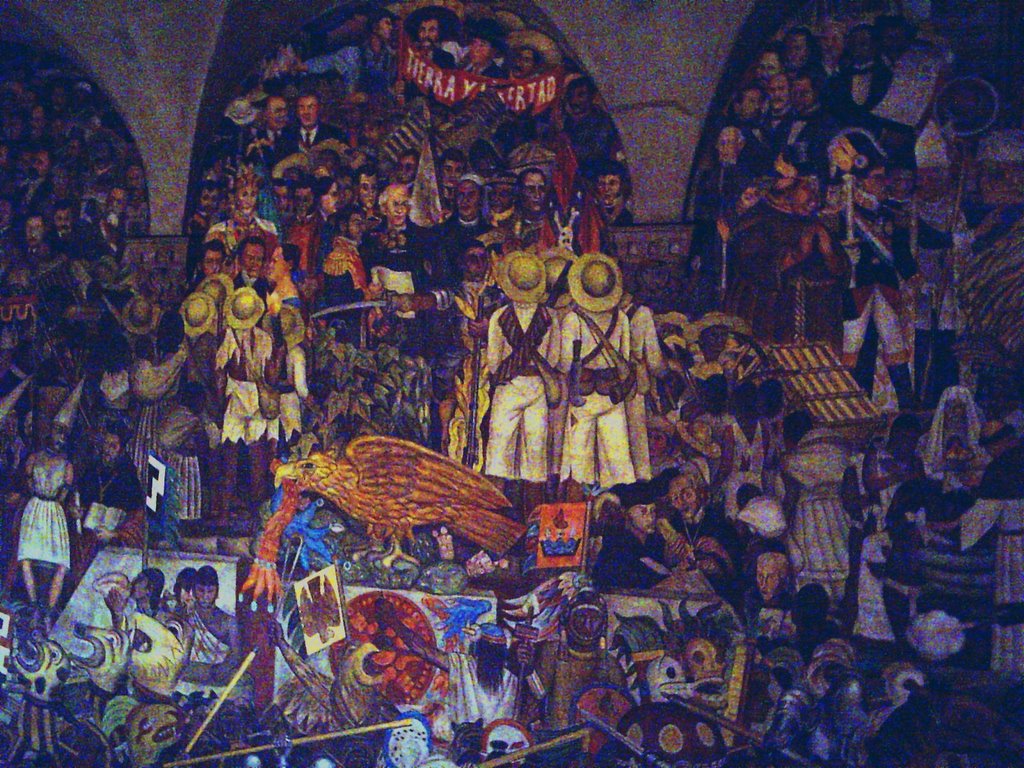
The city of New York is the fundamental foundation that connected all of these photographers. A relationship between art and social change created intellectual and artistic movements. The conditions of the working class were seen as a governmental failure, which fueled artists creating “public works.” Much of the art created was socially stimulated and created a connection both politically and socially.

Mexican Revolution, Diego Rivera

Magazines such as Fortune and Life, and became a very important medium for the distribution of photography. They also propelled the idea of fashion as an art through photography. Magazines focusing on “fine art” were stark. As a result, photographers formed agencies and created galleries to feature their work. The Levy Gallery was one of the first to show photography. Photographers sought refuge in coffeehouses and privately supported venues to exhibit and view photography. Books also became a viable and tangible resource for photographers to publicize their photos and gain recognition. The Museum of Modern Art became the most important support system for photographers and the man appointed director of the department of photography, Edward Steichen, the man who revolutionized commercial photography.

Edward Steichen

The cinema influenced many of the photographers from the New York School. The creation of film noir became a strong source of inspiration in their work. European cinema was an influence and a vanguard toward the progression of an ultramodern approach to their work. Many of the photographers included in the loosely dictated group of the New York School are from other countries. This European modernism influenced not only personal approaches in photography but general artistic perceptions in the photographic world creating a new standard of seeing and the emergence of the New York School.

Fallen Angel (1945)


Helen Levitt is a particular photographer from this group that I am personally drawn to. She was greatly influenced by Henri Cartier-Bresson, with whom I also have an affinity for. Her photography possesses an intuition and sensitivity. Her compositions show her presence in shooting and the receptiveness to the world she lived in. She recognized the significance of gesture and moved with the movements of the streets. Her images created a presence of complexity of light and shadow. Her method has greatly influenced and continues to inspire my personal approach to photography.


Broken Mirror, Helen Levitt

Friday, February 4, 2011

Navigators: Urban Observers and the Intersections of Modernity


A flaneur is an observing city stroller. In, The Man of the Crowd, Edgar Allan Poe is sitting in a coffee house observing the people walking by. In this, he first became obsessed with the details that separated individuals. These details were described in the way in which a person dressed, facial expressions, and the way people walked through the city. He compartmentalized people into classes. Describing the first group as hurried and restless beings quickly navigating themselves from beginning to end, he painted a jostled picture of the working class. The upper class men were described as well dressed individuals who demanded respectability not only through their dress but also their demeanor. The plethora of people illustrated included gamblers, drunkards, prostitutes and thieves as all who created the visual spectacle before him. As day passed into night, his inspection of individual faces, those of which seemed to imply that the orderly people of the day were replaced by the abrasive people of the night, was intensified by means of artificial light. Through the impressionistic glare of the window, he was drawn to a man with an expression on his face that captivated him. He perceived this man as being filthy and his clothes being ragged. He became enthralled with his countenance and decided to follow this man on his walk. Poe studied this man from street to street taking into consideration the pace of his step, expressions on his face, and the physical demeanor of his body language in relation to the space he encompassed. Poe was pursuing this man through a deconstructing walk in an attempt, essentially, to know him. His psychological conclusion is that this man was, “the man of the crowd.” Poe concluded that the man of the crowd was only happy when he was not alone. The man of the crowd is each and every man deconstructed and described at the start of the reading. Although moving through the city with a different style and at different paces, the man of the crowd is each and every person walking the streets of a city.


In reading The Flaneur, Walter Benjamin states that Charles Baudelaire first identified the flaneur as being an urban observer. He said that the advent of the arcades offered a psychological deconstruction of the aspects of a built environment. These aspects included the adaptation of people to large cities. He explored interpersonal relationships between people familiarizing to a modern, bustling environment. The invention of public transportation offers anonymity to the inhabitants of a large city. As a result, people move throughout a city alone within a crowd. Strolling through a city allows a person to evaluate behavior forming a way to move through an urban space. Being an urban observer not only becomes an analytical tool but it transcends into a certain lifestyle, as well. People can walk throughout the city of Chicago and remain undistinguished because the crowds, which populate the streets, offer a hiding place for personal attributes. Also, the city is stigmatized by the phenomenon of modernity, which propels the creation of urban planning and architecture. The political structuring of a city only furthers Benjamin’s findings that because of this, people remain unknown. But with the advent of photography, a person is identifiable. A photograph provides a record of a human being.  Benjamin describes the man of leisure and the consumer as people who walk through a city creating his own series of photographs. He states that with the disappearance of the arcades came the disappearance of observance through the act of strolling.


Benjamin states that the arcades in which the flaneur strolled inconsequentially were replaced by department stores. He felt that the department store took the interior away from the stroller replacing the city streets with the idea of consumption through merchandise. In a department store, people become customers with a common connection void of any personal individuality. The non-verbal exchange in a department store thrusts a person toward consumerism. This consumerism is what presses people through a department store and people become intoxicated with it just as they have in the rigorous state of the city and thus the demise of the “inside.” (picure of department store)

The constant modernization of a city has the ability to isolate the man in the crowd therefore propelling him toward individuality. People walk past one another without a glance. This act only furthers a person’s sense of isolation in a crowd and heightens self-awareness.

In, The City of Modernity: Shifting Perspectives, Urban Transitions, Anke Gleber explores how technological advances affect the observer in a public space. She states that these advances have revolutionized the way a person perceives a city. Through technological advancements such as street illumination, industrialization, photography and moving film, a burgeoning city becomes a constant of visual domain. With the advent of streetlights, sections of a city were illuminated, drawing people to specific places. Advertising and media are also sources of these lights. Packaging design, billboards, posters and signs have become a sort of street art. Traffic via cars and railroad constantly change a person’s visual perceptions. Movies, television, radio, and the Internet are all examples of life in motion. We are a society inundated with constant visual provocations.


Gleber explains that the observer remains open to changes in society and remains deliberately non-judgmental. This outlook toward modernity creates a new stance toward a city’s advancement. Therefore, the flaneur favors the visual representations of modern technology and he is sensitive to the complexities of modern advancements. Because of these advancements, when a person walks down a street, he has a visual experience of multiple sources and proportions ultimately sharpening his senses.


These writers touched upon common ground and share the much of the same sentiments toward urban landscapes. The city dweller is a product of his environment, which is in constant motion. Perhaps he should take the stance of the flaneur and slow his pace enough to observe the world he inhabits.